Parker Schmitz · 5 September 2026
Fungal Underground Systems Enhance Alpine Oak Endurance Across Elevated Mountain Terrains
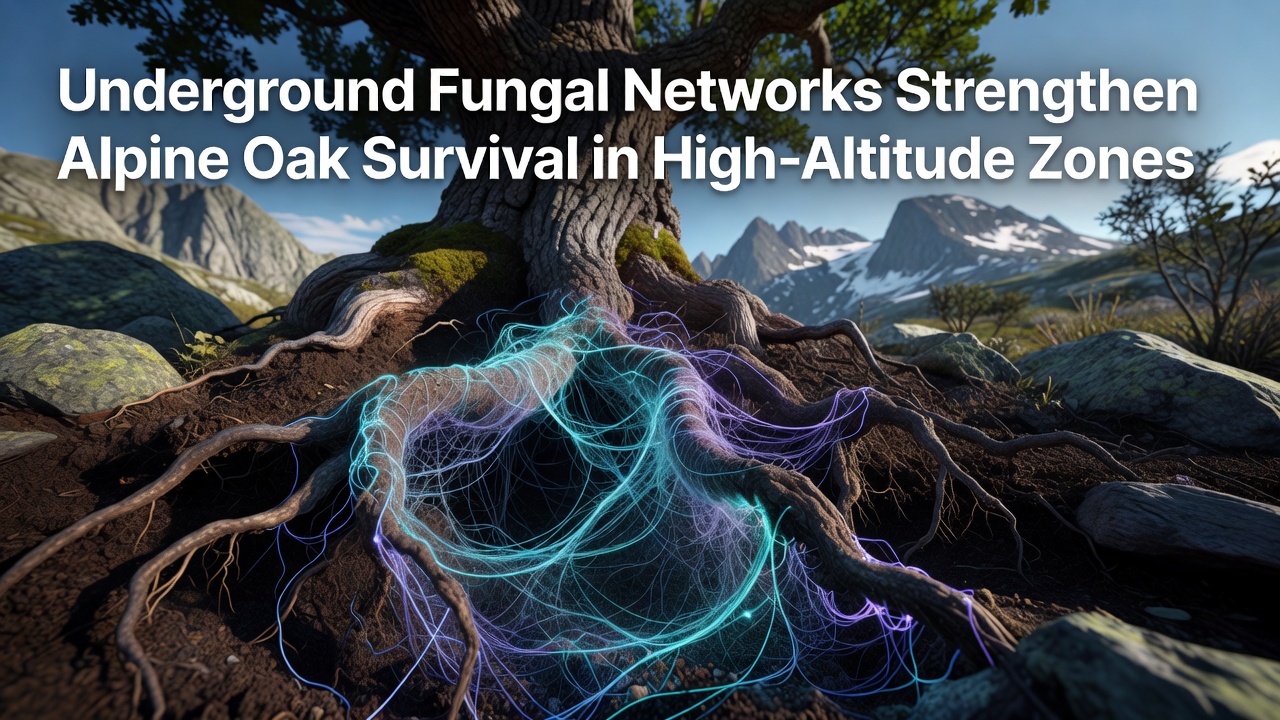
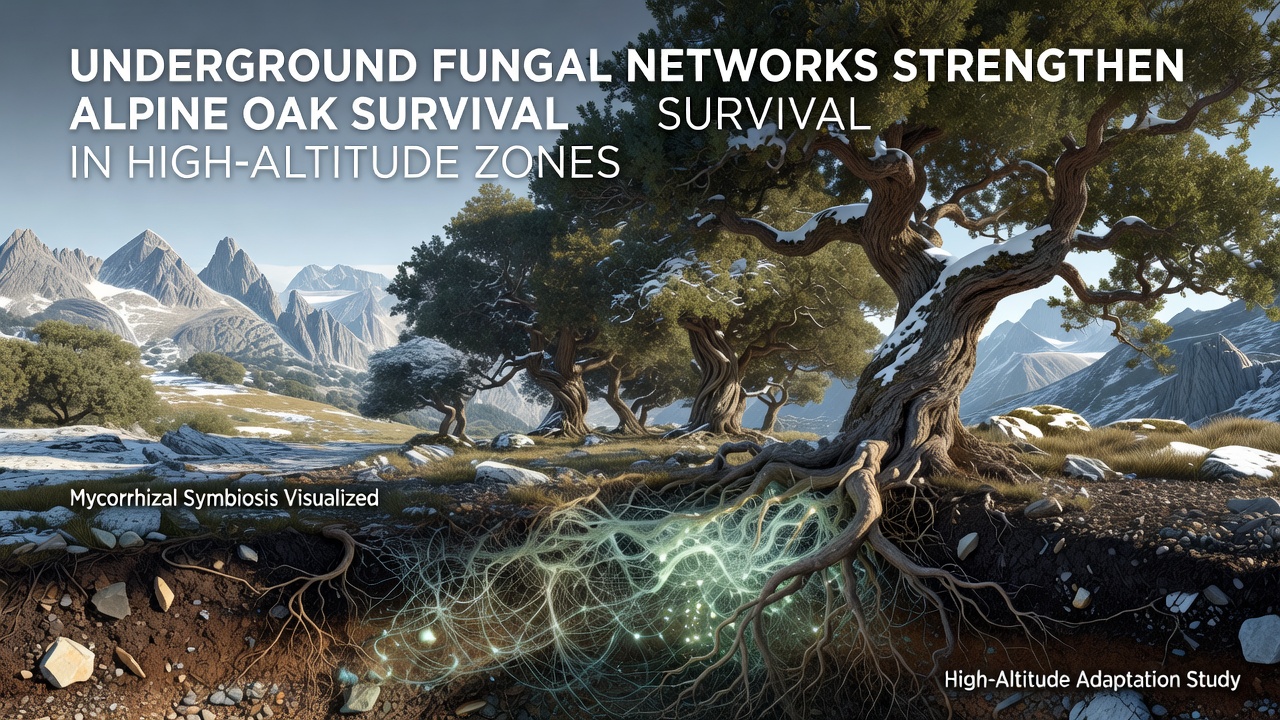
Alpine oaks face extreme conditions at high elevations where thin soils, intense cold, and limited moisture create constant survival pressures, yet underground fungal networks provide critical support through mycorrhizal associations that extend root reach and facilitate resource sharing. These networks consist of filamentous fungi that colonize oak roots and connect multiple trees, allowing transfer of nutrients such as phosphorus and nitrogen while improving water uptake during dry periods. Researchers have documented how these connections become especially vital above 2,500 meters, where above-ground growth slows and plants rely more heavily on below-ground partnerships for sustained function.
Mechanics of Mycorrhizal Support in Harsh Zones
Common mycorrhizal fungi form symbiotic relationships with alpine oak species, penetrating root cells to create interfaces for exchange where the plant supplies carbohydrates in return for minerals extracted from surrounding rock and soil matrices. Data from field sampling shows increased root biomass and higher survival rates among connected oaks compared with isolated specimens, particularly during winter freezes when fungal hyphae continue nutrient mobilization even as plant metabolism drops. Observers note that network density correlates with elevation, with denser linkages appearing at sites experiencing greater temperature swings and lower organic matter content.
Additional benefits include pathogen suppression, since certain fungal strains produce compounds that inhibit soil-borne diseases known to affect oaks in stressed environments. Studies indicate these protective effects compound over time as networks mature, creating stable microbial communities that buffer against sudden environmental shifts. In one documented case, researchers tracking tagged oak clusters found that trees linked through shared fungal pathways maintained higher chlorophyll levels through late-season drought compared with unconnected neighbors.
Research Developments Through 2026
Long-term monitoring programs have tracked fungal community composition across multiple alpine oak stands, revealing seasonal fluctuations where certain ectomycorrhizal species dominate during snowmelt periods and others take over in summer. In September 2026, teams from several institutions released updated mapping data illustrating network extent across the northern Rockies, highlighting how connectivity patterns align with oak population stability metrics collected over five prior years. These findings build on earlier surveys that quantified carbon flow through hyphal pathways, demonstrating measurable support for younger saplings still establishing root systems.
Further analysis from European mountain ranges provides comparative context, showing similar fungal-oak dynamics in comparable elevation bands where soil pH and mineral availability mirror North American conditions. US Forest Service research programs have contributed soil core datasets that researchers cross-reference with Canadian studies on subalpine conifer-fungal interactions, creating a broader picture of how network architecture varies with latitude and bedrock type. Evidence suggests that disturbance from trail construction or small-scale erosion can fragment these networks, leading to measurable declines in oak vigor within affected patches.
Ecological Context and Network Interactions
Alpine oak stands often occur alongside other woody species, allowing fungal networks to link multiple hosts and create shared resource pools that stabilize entire plant communities against erosion and nutrient leaching. Soil moisture retention improves measurably where hyphal mats extend, reducing runoff during heavy precipitation events common at elevation. Those who've studied these systems note that oak seedlings germinating near established network hubs exhibit faster initial growth, likely due to immediate access to established fungal partners rather than starting from scratch.
Seasonal snow cover plays a role in protecting fungal structures from extreme cold, maintaining viable hyphae through months when surface temperatures drop below freezing. Data collected from instrumented plots indicate that network activity resumes quickly after thaw, coinciding with oak bud break and early leaf expansion. This timing alignment supports rapid nutrient uptake before summer drought sets in, a pattern repeated across monitored sites in both continental and maritime mountain systems.
Conclusion
Underground fungal networks represent a foundational element in alpine oak persistence at high altitudes, delivering measurable advantages in nutrient acquisition, water relations, and stress mitigation as shown through repeated field measurements and community analyses. Continued documentation of these interactions supplies baseline information for understanding how oak populations respond to changing climate patterns across elevation gradients. The integration of findings from multiple regions strengthens the overall understanding of these subterranean partnerships without relying on single-site observations alone.