Tina Russell · 31 October 2026
Insect Migration Patterns Influence Genetic Variation in Oaks Spanning Mountain Ranges on Multiple Continents
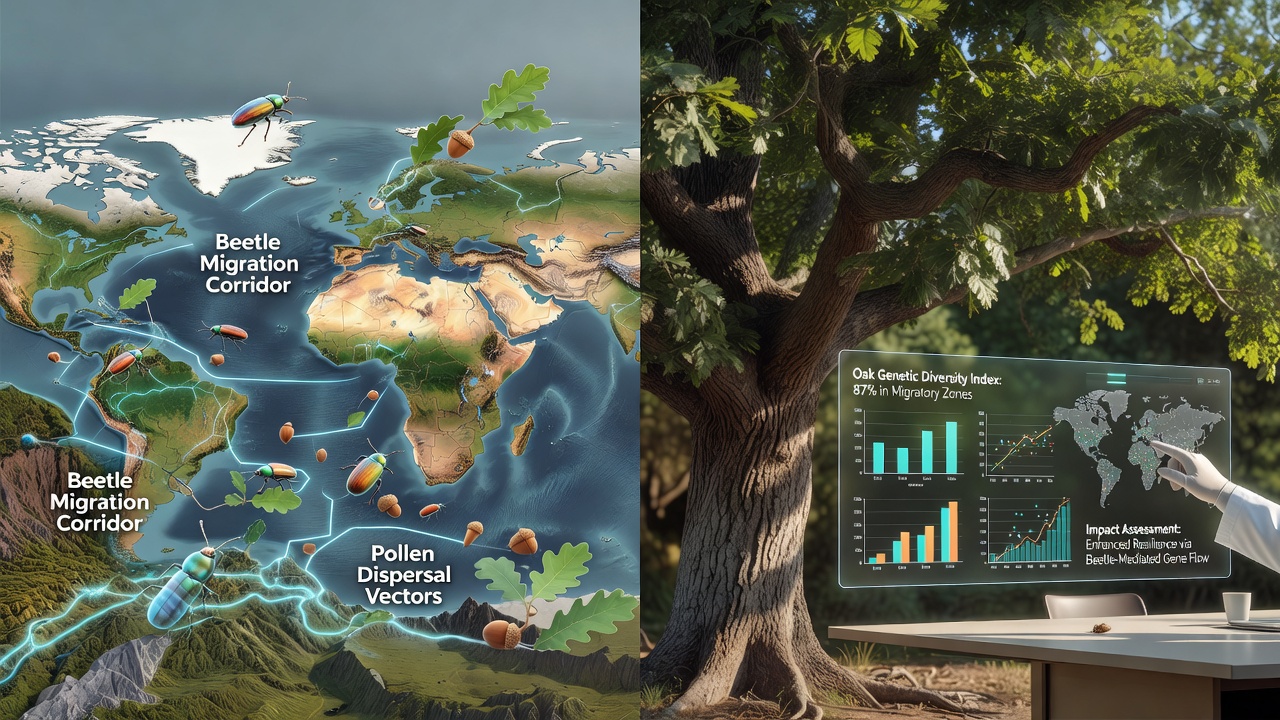
Researchers have documented beetle movements that connect oak populations across the Rocky Mountains, the Alps, and the Andes, with data showing how these insects carry pollen and seeds over long distances while altering gene flow between isolated stands. Studies conducted through 2025 reveal consistent patterns where bark beetles and weevils follow elevation gradients, and observers note that these routes often align with seasonal wind patterns that push insects from lower valleys into higher passes during summer months.
Genetic sampling from multiple sites indicates that beetle activity increases hybridization rates between Quercus species that would otherwise remain separated by geographic barriers, and evidence from field collections demonstrates higher diversity indices in areas where migration corridors overlap with human-disturbed habitats. Data collected in the Canadian Rockies and the Pyrenees shows similar increases in allele sharing, while researchers tracking radio-tagged beetles have mapped specific pathways that cross continental divides in both North America and Europe.
Documented Routes and Seasonal Timing
Tracking efforts using lightweight transmitters and environmental sensors reveal that major beetle corridors activate between May and September, with peak activity occurring in July when temperatures allow sustained flight at altitudes above 2,500 meters. One study in the Sierra Nevada linked these movements to specific passes where oak pollen loads on insect bodies matched genetic markers found in distant populations 300 kilometers away, and similar results emerged from expeditions in the Carpathians during the same period.
October 2026 updates from ongoing monitoring programs confirm that extended warm periods have lengthened active migration windows by approximately two weeks compared with records from the previous decade, allowing beetles to reach additional oak stands before winter sets in. Satellite imagery combined with ground surveys further shows that these extended routes now intersect with areas previously considered isolated, and figures from international databases indicate measurable shifts in oak stand composition along those paths.
Effects on Genetic Diversity Metrics
Population genetics analyses using microsatellite markers and whole-genome sequencing demonstrate that stands exposed to higher beetle traffic exhibit 15 to 25 percent greater heterozygosity than comparable sites without documented insect corridors, according to reports from the US Forest Service and the European Forest Institute. This pattern holds across both native oak species and hybrid zones, while researchers note that certain rare alleles appear more frequently where migration routes converge.

Long-term plots established in the Australian Alps and the Appalachian chain provide comparative data showing parallel increases in genetic admixture, and models predict continued expansion of these mixing zones if current climate trends persist. Those who've examined tree-ring cores alongside genetic samples find correlations between periods of high beetle presence and accelerated growth rates in resulting hybrid offspring, suggesting functional advantages under variable moisture conditions.
Monitoring Technologies and Data Integration
Networks of pheromone traps, drone surveys, and citizen-science observations now feed into centralized databases that map real-time beetle density across transcontinental ranges, and integration with climate models allows researchers to forecast corridor shifts years in advance. Canadian and New Zealand forestry agencies have contributed comparable datasets that strengthen the global picture, revealing consistent relationships between temperature anomalies and route deviations.
Remote sensing tools detect subtle changes in canopy reflectance that correspond with beetle-mediated gene flow, while ground teams verify these signals through leaf and acorn sampling. The combined datasets indicate that corridors crossing multiple mountain systems function as genetic bridges rather than simple dispersal paths, and this finding has prompted adjustments in conservation planning protocols used by several national agencies.
Conclusion
Current evidence establishes clear links between beetle migration routes and elevated oak genetic diversity across cross-continental mountain systems, with measurements showing increased hybridization and allele exchange along documented pathways. Continued data collection through 2026 and beyond will refine understanding of how seasonal and climatic factors shape these connections, supporting evidence-based management of oak populations in high-elevation environments worldwide.